

The way you are perceived by others can significantly impact your professional trajectory. Intentional imaging is a thoughtful, reflective approach to shaping perceptions without sacrificing authenticity. It’s not about creating a façade but making sure that your professional strengths, values, and goals align with how you present yourself to others. Whether interacting with your boss, peers, or team, Intentional imaging allows you to project the qualities that matter most in each context.
Why does intentional perception matter in a professional setting?
In high-stakes situations, how you present yourself significantly impacts your career success and interpersonal relationships. A well-managed professional image can open doors to new career opportunities, facilitate positive feedback, and even influence leadership roles.
This approach is a balance between maintaining authenticity and projecting traits that align with your career aspirations. It’s essential for career growth, consistent effort, and navigating potential negative evaluations or consequences. Through intentional imaging, you develop communication competence and habits that foster meaningful relationships and positive evaluations.
In summary, intentional imaging is a strategic approach to self-presentation, focusing on being genuine while enhancing the qualities that will propel your career trajectory forward.
What is Intentional Imaging?
At its core, Intentional Imaging is about consciously aligning your actions, communication, and physical appearance with the way you want to be perceived. It’s not about faking anything. It’s about amplifying the strengths that define you and making sure those qualities come across effectively.
For instance:
- With your boss, you might want to be seen as competent, reliable, and results-driven.
- With your peers or colleagues, you may aim to come across as approachable, collaborative, and dependable.
- With your team, you might want to embody an empowering, supportive leader who prioritizes their growth.
By tailoring your approach to different audiences, you create meaningful professional relationships while maintaining a consistent and authentic core identity.
Unlike conventional personal branding, which often emphasizes surface-level characteristics and broad appeal, Intentional imaging delves deeper. It focuses on crafting an authentic persona that accurately reflects who you are and what you value.
Key Differences from Conventional Approaches:
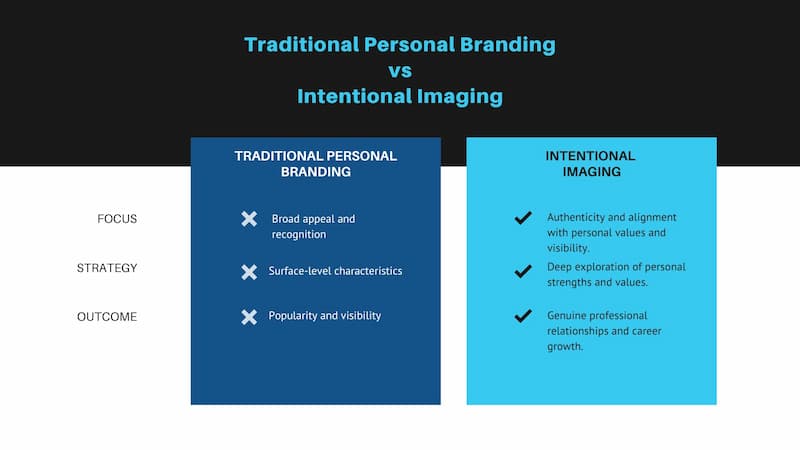
Professionals who use intentional imaging report a stronger alignment between their inner selves and how they are perceived externally. This harmony not only reduces negative evaluations but also enhances career opportunities by promoting meaningful personal relationships and positive communication processes.
By investing in intentional imaging, professionals can consciously steer their career trajectory while maintaining a consistent effort toward authentic representation.
How You’re Perceived Often Dictates Your Career Trajectory
Intentional imaging is about shaping how you are perceived to align with your career aspirations and growth. It’s the intentional action of balancing authenticity with strategic self-presentation.
Consider the potential pitfalls of unfiltered authenticity. While it’s essential to be genuine, an unedited display of your personality can lead to misunderstandings or unwanted friction in the workplace. This is where communication habits and competence come into play, helping to avoid negative evaluations or consequences.
To effectively manage your image without compromising who you are, focus on these key areas:
- Interpersonal Communication
- Consistent Effort
- Open to Feedback
- Personal Appearance
Remember, it’s not about creating a façade but enhancing your authenticity to ensure your career opportunities continue to appear without unnecessary obstacles. By being mindful of how you’re perceived, you pave the way for constructive interpersonal relationships and meaningful growth in your professional journey.
Non-Verbal and Verbal Cues to Reinforce Your Intentional Image
How you carry yourself plays a significant role in shaping perceptions. Non-verbal cues, such as posture, tone, and body language, can reinforce the Intentional Image you’re working toward.
Non-Verbal Cues:
- Body Language – Stand tall or sit up straighter to convey confidence and competence. Employ open gestures, such as uncrossed arms, to appear approachable and engaged. A firm handshake can also communicate professionalism and self-assurance.
- Facial Expressions – A genuine smile can build rapport and foster positive relationships. Maintain appropriate eye contact to show attentiveness and respect during communication encounters.
Verbal Cues:
- Tone of Voice – A calm, steady tone suggests confidence and composure, especially in high-stakes situations. Varying your pitch can emphasize enthusiasm and engagement.
- Communication Style – Use constructive feedback and positive language to build meaningful relationships. Listening actively and responding thoughtfully demonstrates communication competence and fosters professional relationships.
These cues, when aligned with your desired perception, subtly but powerfully influence the way you’re perceived. By making these adjustments, you can enhance your image, align with career aspirations, and open the door to new career opportunities.
Using the Intentional Imaging Worksheet
The Intentional Imaging Worksheet is an essential tool designed for reflection and planning your professional image. It allows you to strategically craft how you are perceived, aligning your personal brand with your career aspirations.
Begin by identifying audience-specific characteristics you want to project. For leadership roles, aim to be seen as decisive and visionary. For peers, you might want to be collaborative and supportive. For team interactions, consider projecting approachability and mentorship.
Example Worksheet:
| Interaction Type | Desired Perception | Action Steps |
| Leadership | Decisive, Visionary | Lead strategy meetings, share innovative ideas |
| Peer | Collaborative, Supportive | Engage in joint projects, provide feedback |
| Team | Approachable, Mentoring | Host Q&A sessions, offer guidance |
Use this table to outline key interactions and actionable steps. Regularly track and review your progress to ensure these actions consistently align with your career goals. Adjust your strategies based on feedback and your desired professional relationships.
By consistently refining your image with intention, you’ll enhance your interpersonal communication and build meaningful relationships that drive career growth.
Bringing Intentional Imaging into Daily Practice
Regularly assessing and refining your Intentional Image is crucial in today’s ever-evolving career landscape. Striking a balance between authenticity and intentionality in professional relationships can significantly impact your career trajectory. Whether you are striving for a leadership role or seeking new career opportunities, your personal brand plays a pivotal role in shaping how you’re perceived.
To start this journey, download this worksheet designed to help you craft and maintain your Intentional Image. Here’s how to integrate intentional imaging into daily practice:
- Self-assessment: Regularly evaluate your communication habits and personal appearance.
- Feedback: Seek feedback from others to fine-tune your professional relationships.
- Adjustments: Be prepared to make necessary changes based on feedback and personal reflection.
A consistent effort toward aligning your image with your career goals can pave the way for meaningful relationships, both professional and personal. Remember, communication competence and positive interpersonal relationships are key to avoiding negative consequences and achieving the career success you aspire to.